BNB Chain DeFi Investment Guide: Staking, Tokens, and Smart Contracts
BNB Smart Chain (BSC) has established itself as one of the most active blockchains for DeFi activity, offering fast transactions, low fees, and a mature ecosystem of DEXes, staking protocols, and BEP-20 tokens.
What Makes BNB Smart Chain Different?
| Feature | BNB Smart Chain | Ethereum |
|---|---|---|
| Block time | ~3 seconds | ~12 seconds |
| Avg transaction fee | ~$0.10-0.30 | $2-50+ |
| Token standard | BEP-20 | ERC-20 |
| Main DEX | PancakeSwap | Uniswap |
| Validators | 21 active | Proof of Stake |
For investment platforms distributing frequent rewards, BSC's lower fees make on-chain reward distribution significantly more practical than Ethereum.
BEP-20 Tokens Explained
BEP-20 is the token standard for BNB Smart Chain, equivalent to Ethereum's ERC-20. Any BEP-20 token can be:
- Held in any BSC-compatible wallet (MetaMask, Trust Wallet)
- Traded on PancakeSwap and other BSC DEXes
- Verified on BSCScan
- Added to DeFi protocols
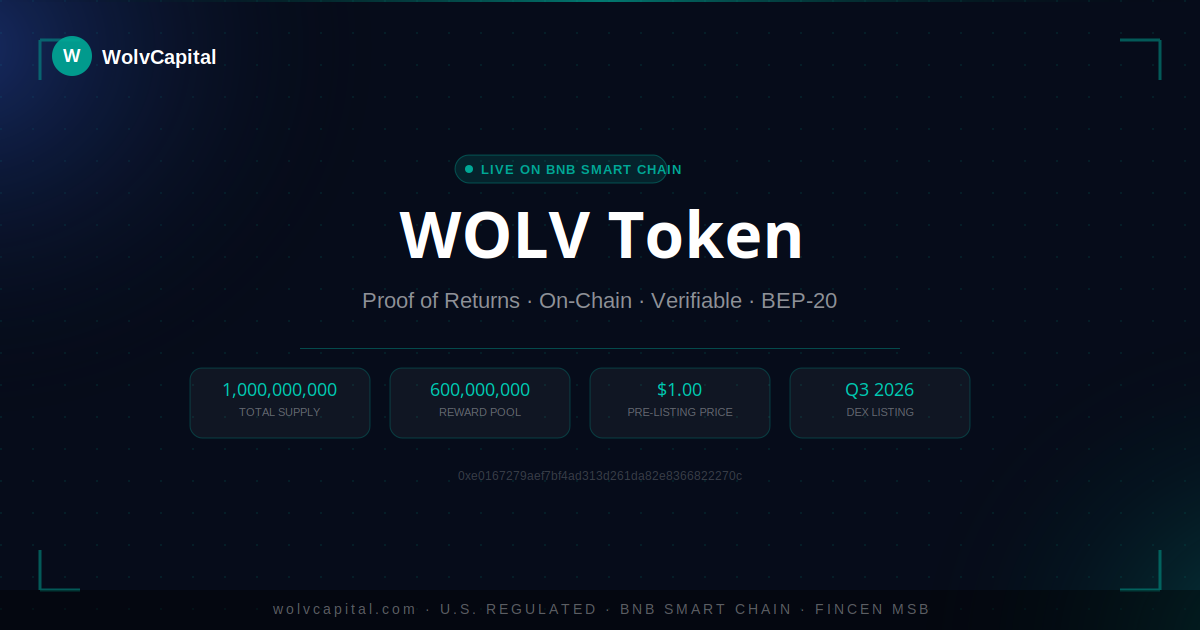
WOLV, WolvCapital's reward token, is a BEP-20 token with a fixed supply of 1,000,000,000.
How to Verify a Smart Contract on BSCScan
Before investing in any BSC-based platform, verify its smart contracts:
- Go to bscscan.com
- Enter the contract address in the search bar
- Click the Contract tab
- Look for the green checkmark indicating verified source code
- Read the contract code or use a tool like DeFiLlama to analyse it
WolvCapital's three contracts are all verified:
PancakeSwap and DEX Liquidity
PancakeSwap is the dominant DEX on BNB Smart Chain. When a token is listed on PancakeSwap, it becomes freely tradeable. WolvCapital plans to list WOLV on PancakeSwap in Q3 2026, with initial liquidity provided to support price stability.
Risk Considerations for BNB Chain DeFi
- Smart contract bugs can result in loss of funds
- DEX prices are determined by liquidity pool ratios
- Pre-listing tokens carry additional price uncertainty
- Regulatory treatment of DeFi varies by jurisdiction
Always verify contracts, read risk disclosures, and invest only what you can afford to lose.